






















The roguelike space has become wonderfully chaotic over the last few years. Bullet heavens exploded in popularity, deck builders carved out their own loyal kingdoms, and indie developers started mixing genres like they found the world’s most dangerous smoothie blender.
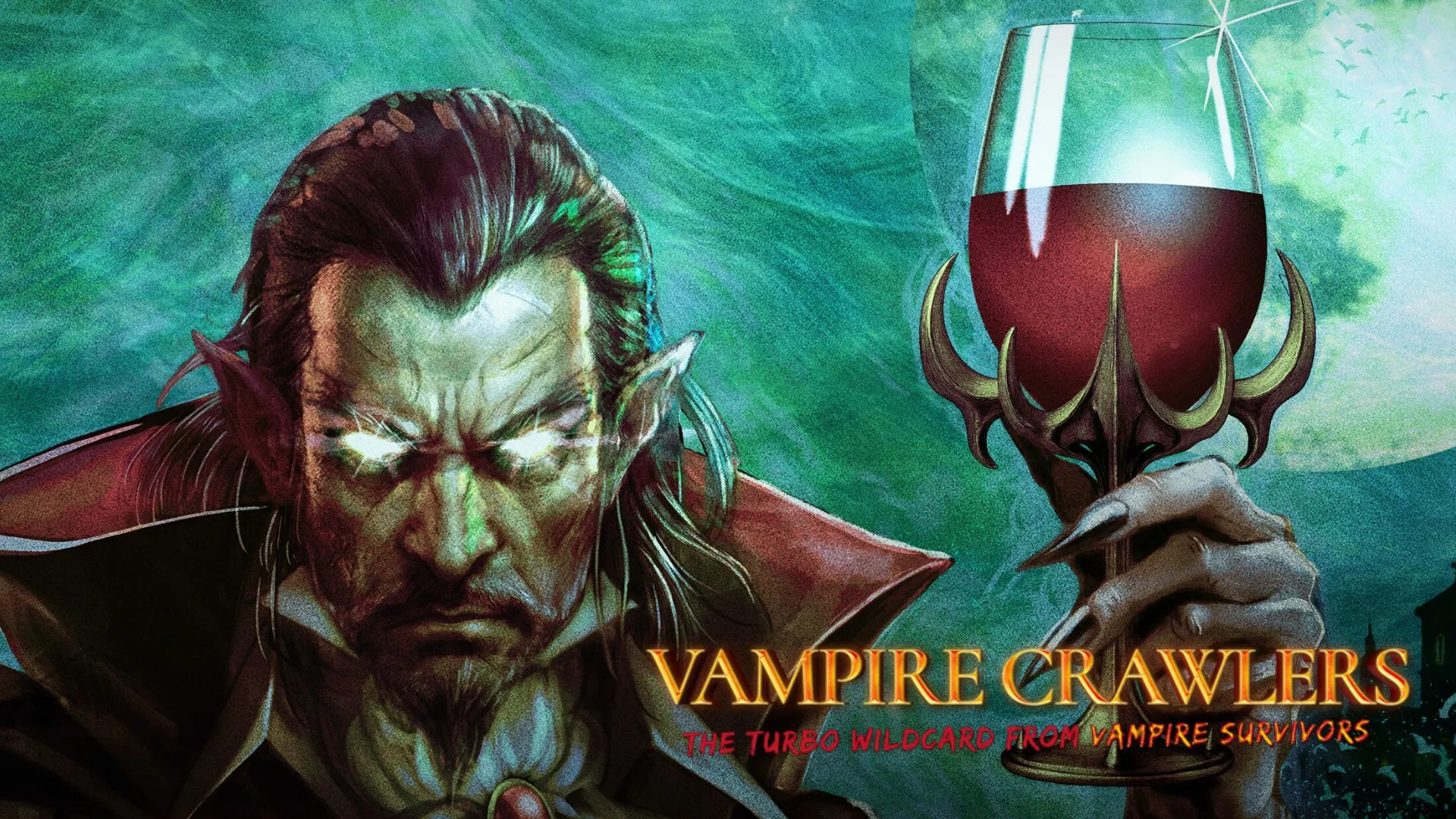
Vampire Crawlers is one of those experiments.
At first glance, comparisons to Vampire Survivors are unavoidable. The swarms, escalating chaos, and power fantasy DNA are clearly present. But Vampire Crawlers takes that familiar formula, spins it into first person, adds deck-building elements, and creates something that feels surprisingly distinct.
It’s weird. It’s busy. It’s occasionally overwhelming.
And somehow, it works.
Gameplay: Bullet Heaven Meets Deck Builder
The easiest way to describe Vampire Crawlers is as a collision between a dungeon crawler and a lightweight deck-building roguelike.
“This game is an easy enough deck builder.”
That accessibility is part of the appeal.
The systems never become intimidating, which means players can focus on experimentation rather than spreadsheet-level optimization. Cards and upgrades flow naturally into the run structure, giving players enough strategic choice without burying them under complexity.
Combat leans heavily into spectacle.
Enemies pour in, abilities stack, effects multiply, and eventually the screen becomes a fireworks show that appears to have declared independence from subtlety.
“It’s full of flashing graphics the entire time.”
That visual chaos is either part of the fun or the point where some players start reaching for sunglasses.
Still, there’s energy here. Runs move quickly, decisions feel meaningful, and progression keeps pushing players toward “just one more attempt.”
Classic roguelike behavior.
Meta Progression & Replayability
Where Vampire Crawlers really finds its footing is in progression.
Good roguelikes understand that players aren’t only chasing victory. They’re chasing growth.
Vampire Crawlers feeds that loop well.
Unlocks, upgrades, and long-term improvements give failed runs value. Even when a session ends early, it rarely feels wasted because there’s usually something earned, discovered, or advanced.
That meta layer creates momentum.
It keeps the experience moving forward and helps soften the sting that naturally comes with roguelike losses.
Replayability benefits too.
Different builds, upgrade combinations, and approaches encourage experimentation, which is essential for a game built around repeated runs.
Story, Humor & Personality
Narrative isn’t the main attraction here, but Vampire Crawlers does make an effort to inject personality into the experience.
There’s humor scattered throughout, and the tone avoids taking itself too seriously.
That matters.
Games built around endless combat loops can sometimes feel mechanically impressive but emotionally flat. Even small doses of character or comedy help create identity.
The story elements won’t overshadow the gameplay, but they give the world enough flavor to stand apart from being “another survivor clone.”
And that distinction matters in a crowded genre.
How It Compares to Vampire Survivors
The comparison elephant is impossible to ignore.
Vampire Survivors remains one of the defining games of the genre, so anything orbiting that design space is going to invite side-by-side analysis.
Where Vampire Crawlers separates itself is perspective and pacing.
Instead of the detached overhead style, the first-person approach changes how players engage with movement and combat. The deck-building systems also add decision points that shift focus away from pure positioning.
The result feels less like imitation and more like reinterpretation.
Not a replacement.
Not a clone.
More like a cousin who showed up wearing different armor.
What Works
The strengths of Vampire Crawlers are pretty clear:
- Accessible deck-building systems
- Strong meta progression
- Fast gameplay loops
- Good replay value
- Distinct first-person perspective
- Enough humor and personality to stand out
And perhaps most importantly, it understands its lane.
It doesn’t try to become the deepest strategy game in existence. It aims for approachable fun and largely succeeds.
What Doesn’t
Visual overload may be the biggest hurdle.
The constant effects, enemy swarms, and flashing combat feedback can become exhausting during longer sessions.
Players looking for:
- Deep tactical complexity
- Heavy narrative focus
- Slower pacing
…may also find the experience lighter than expected.
The accessibility is a strength, but it also means genre veterans might wish for a few more layers.
Final Thoughts
Vampire Crawlers is one of those indie games that wins by blending familiar ingredients into something slightly unexpected.
It borrows ideas from survivor-style chaos, mixes in deck-building mechanics, adds progression hooks, and wraps it all inside a first-person shell.
The result is an experience that feels approachable, replayable, and surprisingly easy to sink time into.
“This game is a solid 80-something for me.”
That feels about right.
It may not redefine the genre, but it doesn’t need to. Sometimes being a fun twist on a proven formula is enough.
And Vampire Crawlers pulls that off.