




















Some games invite you to play. Others invite you to watch.
Mixtape sits somewhere in the middle, blending interactive storytelling, music, nostalgia, and coming-of-age drama into an experience that often feels more like a film than a traditional video game. That’s not necessarily a criticism. Plenty of successful narrative-driven games have thrived by prioritizing story over mechanics.
The challenge for Mixtape is that it spends so much time trying to balance its cinematic ambitions with gameplay that it never fully commits to either.
The result is a fascinating, occasionally frustrating experience that has sparked surprisingly heated conversations among players and critics alike.
A Story Built on Nostalgia and Adolescence
At its core, Mixtape is a coming-of-age story.
The game follows a group of teenagers navigating friendship, uncertainty, and the emotional turbulence that accompanies the transition into adulthood. The narrative leans heavily into nostalgia, inviting players to reflect on those awkward, messy years where every decision felt monumental and every friendship felt permanent.
The premise is strong.
The execution, however, is where opinions begin to diverge.
While the game clearly wants players to connect with its characters, many of those characters can be difficult to embrace. Their decisions are often impulsive, self-centered, and occasionally frustrating.
That may be intentional.
Teenagers aren’t always likable, and authentic coming-of-age stories often thrive in uncomfortable spaces. But authenticity doesn’t automatically translate into emotional investment.
As a result, some players may find themselves appreciating what the game is trying to say more than they enjoy spending time with the people saying it.
Character Dynamics: Realistic but Not Always Relatable
One of the most interesting discussions surrounding Mixtape revolves around its cast.
The characters feel believable. Their conversations often capture the awkward rhythms of teenage friendships, and their relationships evolve in ways that feel grounded.
The problem isn’t realism.
It’s connection.
Many of the central characters occupy a world shaped by privilege and self-absorption, which can create distance between the audience and the emotional stakes. Rather than rooting for the characters, players may find themselves analyzing them from afar.
That isn’t inherently a flaw. Some of the best stories ever told center on deeply flawed people.
But it does make Mixtape a more complicated emotional experience than its nostalgic presentation might initially suggest.
Does Mixtape Work Better as a Movie Than a Game?
This question sits at the center of nearly every conversation about Mixtape.
The game frequently feels more interested in delivering moments than creating systems. Much of the experience unfolds through scripted sequences, cinematic storytelling, and guided interactions.
And that’s where the biggest divide emerges.
Players seeking traditional gameplay may come away wanting more.
The interactive elements and mini-games provide variety, but they rarely feel essential to the experience. In many cases, they serve as connective tissue between story beats rather than meaningful gameplay systems.
That doesn’t make them bad.
It simply raises an important question: if the interactive elements were removed entirely, would the experience lose much of its impact?
For some players, the answer may be no.
Gameplay: Functional but Lightweight
The gameplay isn’t the star of the show.
Instead, Mixtape uses a collection of simple activities and mini-games to support its narrative. These moments occasionally provide fun diversions, but they rarely develop into anything mechanically compelling.
Players looking for:
- Deep gameplay systems
- Meaningful progression
- Challenging mechanics
- Extensive player agency
…may find themselves disappointed.
The experience is intentionally accessible, but that accessibility sometimes comes at the expense of engagement.
The game succeeds more as a vehicle for storytelling than as a showcase of gameplay innovation.
The Soundtrack Is the Real Headliner
If there’s one area where Mixtape consistently shines, it’s music.
The soundtrack does far more than provide background noise. It functions as an active storytelling tool, shaping mood, reinforcing themes, and elevating key moments throughout the narrative.
What makes the music particularly effective is the selection itself.
Rather than relying entirely on obvious crowd-pleasers, the soundtrack incorporates deeper cuts and unexpected choices that fit the emotional tone of specific scenes.
The result feels curated rather than commercial.
Each song feels chosen for a reason.
And in a game literally built around the concept of a mixtape, that’s exactly what you’d hope for.
Graphics and Presentation
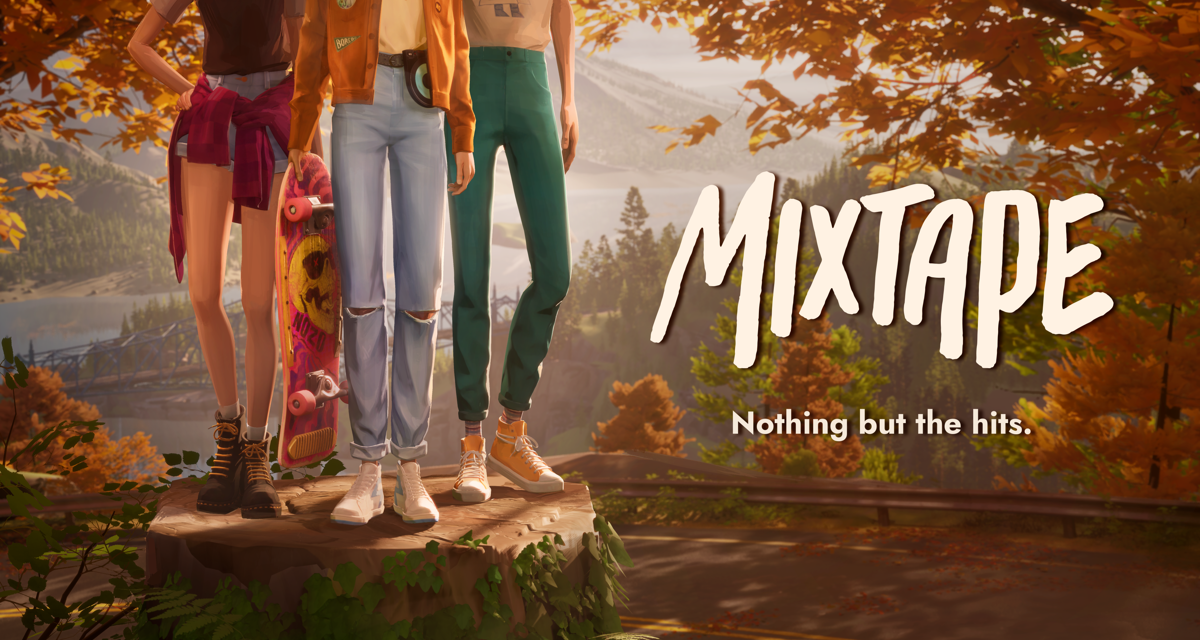
Visually, Mixtape is polished and stylish.
The art direction embraces a modern, cinematic aesthetic that complements the game’s nostalgic themes. Character animations, environmental detail, and visual transitions all contribute to an experience that often feels carefully crafted.
The presentation consistently supports the emotional goals of the story.
One surprising point of discussion, however, has been the game’s file size. For an experience built primarily around narrative and relatively simple gameplay systems, some players may be surprised by how much storage space it occupies.
It’s hardly a deal-breaker, but it’s one of those technical details that catches attention.
The Review Score Controversy
Few aspects of Mixtape have generated more discussion than its review scores.
Much of the debate centered around particularly enthusiastic reviews from major outlets, with some players questioning whether the critical praise accurately reflected the game’s strengths and weaknesses.
Adding fuel to the conversation was speculation surrounding music licensing costs and production values. Some argued that the impressive soundtrack and presentation contributed heavily to positive impressions, while others believed the gameplay shortcomings were being overlooked.
Ultimately, the controversy says less about the game itself and more about the challenge of evaluating narrative-driven experiences.
A player looking for emotional storytelling may see a masterpiece.
A player looking for engaging gameplay may see a missed opportunity.
Both perspectives can exist simultaneously.
What Works
Mixtape succeeds in several key areas:
- Strong atmosphere and presentation
- Excellent soundtrack integration
- Authentic coming-of-age themes
- Beautiful visual design
- Memorable narrative moments
- Thoughtful use of nostalgia
When everything clicks, the game creates scenes that linger long after the credits roll.
What Doesn’t
The game’s weaknesses are harder to ignore:
- Limited gameplay depth
- Uneven tone between comedy and drama
- Characters that can be difficult to connect with
- Pacing issues in some narrative sections
- Questions about whether its interactivity adds enough value
The game often feels torn between being a film and being a game, and that internal struggle occasionally undermines both sides of the experience.
Final Thoughts
Mixtape is one of the more interesting narrative games to come along in recent memory, not because it gets everything right, but because it’s willing to take risks.
Its coming-of-age story explores friendship, nostalgia, privilege, and self-discovery through a stylish presentation and a fantastic soundtrack. At its best, it captures the emotional uncertainty of adolescence with surprising authenticity.
At the same time, its limited gameplay and divisive cast will make it a tougher sell for players seeking traditional game mechanics.
Whether Mixtape works for you may depend on a simple question:
Are you looking for a game with a story, or a story that happens to be a game?
The answer will likely determine how much this particular mixtape resonates.