
























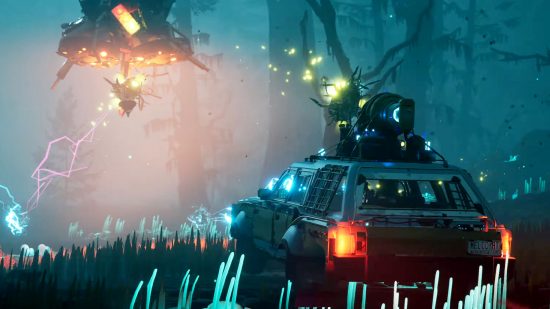
In this episode of Game Pass Grab Bag, the hosts buckle up and head into the strange, storm-ridden world of Pacific Drive, a first-person survival crafting game now available on Game Pass. Built around a single, constantly evolving vehicle, the game blends exploration, resource management, and atmospheric tension into a loop that feels both familiar and oddly personal.
Andrew: 83 – Game
Keith: 75 – Game
Aaron: 75 – Game
Average: 77.7
From the outset, Pacific Drive makes it clear what kind of experience it wants to be: less about combat, more about survival through preparation, problem-solving, and persistence.
“This is a game.”
The Core Loop: Drive, Scavenge, Survive
At the heart of Pacific Drive is its vehicle-centric gameplay loop. Players venture into dangerous zones, scavenge resources, and return to their garage to repair and upgrade their car before heading back out again.
The hosts praise how tactile and hands-on this process feels. Upgrading the vehicle isn’t just menu-based number tweaking — it feels physical, intentional, and earned. Every upgrade directly impacts survivability, reinforcing the bond between player and machine.
This loop is simple, but effective, and it keeps momentum strong even during longer play sessions.
Crafting and Progression
Pacific Drive’s crafting system is tightly focused around the car. Rather than overwhelming players with sprawling tech trees, progression feels contained and readable, making it accessible to both casual players and genre veterans.
Achievements tie naturally into exploration and experimentation, offering satisfying milestones without demanding excessive grind. The hosts note that unlocking upgrades and achievements feels rewarding rather than obligatory.
Atmosphere Through Sound and Space
One of the game’s strongest elements is its audio design. Environmental sounds, distant storms, and unsettling ambience create an eerie mood that constantly keeps players on edge.
The soundscape does much of the emotional heavy lifting, especially when paired with the game’s isolated environments. Even when nothing is happening, it feels like something could happen at any moment.
This tension elevates exploration, making even routine drives feel uncertain.
Visuals and Environmental Design
Visually, Pacific Drive is solid and cohesive. The environments are striking at first glance, with moody lighting and strong environmental identity. Over time, however, the hosts note that some areas can feel visually repetitive, especially during extended sessions.
That said, the visual design supports the game’s tone well, reinforcing the sense of desolation and unpredictability that defines the experience.
Story and Characters: The Weak Link
While Pacific Drive is rich in atmosphere, its story and character development don’t land as strongly. Inspired loosely by Roadside Picnic, the narrative hints at deeper mystery but never fully capitalizes on it.
Characters exist more as functional guides than emotional anchors, and the story often feels secondary to the mechanics. The hosts agree that while the narrative doesn’t ruin the experience, it also doesn’t meaningfully elevate it.
Final Thoughts
Pacific Drive succeeds where it matters most: gameplay feel, atmosphere, and mechanical identity. Its focus on a single evolving vehicle creates a unique survival experience that stands out in a crowded genre.
While the story may underwhelm and the environments can feel repetitive over time, the game’s tactile crafting, strong audio design, and satisfying progression loop keep it engaging.
The final ratings reflect that balance:
“I think I would go with a 79.”
“I would give this a 75.”
Pacific Drive may not be perfect, but for players who value atmosphere, systems-driven gameplay, and survival through preparation, it’s well worth the trip.