






















What happens when you take dungeon crawling, roguelike progression, resource management, and running a shop, then somehow make all of those systems work together?
You get Moonlighter 2.
The sequel builds on the foundation of the original Moonlighter by adding more layers to nearly every part of the experience. You still venture into dangerous dungeons, collect valuable resources, and bring your spoils back to your shop. But now there are more systems, more choices, more customization, and more ways for all of those pieces to interact.
For fans of the original, the biggest question is whether Moonlighter 2 improves on the formula without making it unnecessarily complicated.
For newcomers, the question is a little simpler: is there enough here to make the trip into the dungeon worth taking?
Based on the experience discussed by the hosts, the answer is a pretty enthusiastic yes.
“The gameplay loop is highly addictive.”
Gameplay: Dungeon Crawling Meets Shopkeeping
The core appeal of Moonlighter 2 comes from its unusual gameplay loop.
You venture into dungeons, fight enemies, collect resources and valuable items, and then return to your shop to sell what you’ve found.
That creates a satisfying cycle where combat and exploration directly feed into your economic progression.
You’re not just fighting monsters for the sake of fighting monsters. You’re collecting things that have value back home.
And you’re not just running a shop for the sake of making money. That money feeds back into your ability to become stronger and explore further.
It’s a remarkably cohesive structure.
“The systems all fit together perfectly.”
That’s arguably the most important takeaway from the discussion.
The sequel doesn’t simply pile new mechanics on top of the original. The various systems are designed to interact with one another, creating a gameplay loop where each activity has a purpose.
More Complex Than the Original
One of the biggest changes in Moonlighter 2 is how much more complexity has been added to the original formula.
The first game established the basic idea. Dungeon crawl. Collect loot. Run your shop. Upgrade your character and equipment. Go back into the dungeon.
The sequel takes that foundation and starts adding layers.
There are more systems to understand, more ways to customize your character and loadout, and more interactions between the different progression mechanics.
That added complexity can make the game feel more engaging because there are more meaningful decisions to make.
The important thing is that the complexity doesn’t appear to overwhelm the core loop.
Instead, it gives players more ways to approach it.
Combat and Loadout Customization
Combat remains a major part of the experience, with different weapon types and character choices allowing players to customize how they approach encounters.
This is where the RPG and roguelike elements begin to overlap.
Your choices aren’t simply cosmetic. The weapons, perks, abilities, and loadout options all contribute to how you approach your dungeon runs.
That encourages experimentation.
You can adjust your approach based on the challenges you’re facing, experiment with different combinations, and gradually figure out what works best for your preferred playstyle.
The result is a system that gives the player more ownership over how they play.
The Dungeon Design
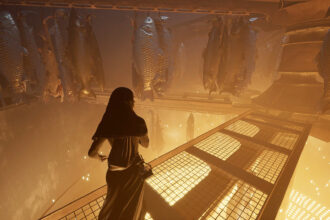
The dungeons are where the roguelike side of Moonlighter 2 really comes into focus.
Each trip provides opportunities to gather different resources, encounter different challenges, and make decisions about how far you want to push your run.
Do you keep going for better loot?
Do you play it safe and return to the shop?
Do you risk losing a valuable haul?
Those decisions create the tension that makes the dungeon-crawling side of the game work.
The variety of dungeons and the interactions between their systems also contribute to the game’s replayability.
You’re not simply repeating the exact same sequence of events.
The Shop Is More Than a Side Activity
The shopkeeping component remains one of the things that separates Moonlighter 2 from other dungeon crawlers.
Your shop isn’t just a break from combat.
It’s an essential part of the progression system.
Everything you collect in the dungeon potentially has value. You have to think about what you’re selling, how you’re managing your resources, and how your shop improvements contribute to your overall progression.
That creates a satisfying relationship between the two halves of the game.
The dungeon provides the inventory.
The shop turns that inventory into progress.
And that progress makes it possible to go deeper into the dungeon.
It’s a wonderfully circular system.
Progression and the Grind
Of course, any game built around repeated dungeon runs and resource collection is going to involve some grinding.
The question is whether that grind feels productive.
In Moonlighter 2, the various progression systems give players plenty of reasons to keep pushing forward.
Upgrades, perks, weapons, shop improvements, and other systems all contribute to the sense that you’re gradually becoming more capable.
The risk with this type of design is that progression can start feeling like busywork.
Fortunately, the integration between systems helps keep the grind from feeling completely disconnected from the rest of the experience.
You’re always working toward something.
Difficulty: Something for Everyone
Moonlighter 2 also gives players multiple difficulty options.
Normal mode is relatively forgiving, which makes the game more approachable for players who primarily want to enjoy the exploration, combat, and shopkeeping systems.
Higher difficulty settings provide a much more demanding experience for players who want to push themselves.
That flexibility is a welcome addition because it allows different types of players to engage with the same underlying systems.
If you’re here for the cozy side of running a shop and exploring dungeons, you have an accessible path.
If you want the game to sharpen its claws, the higher difficulty settings are waiting.
Story and World-Building
Story isn’t necessarily the strongest part of Moonlighter 2.
The game has narrative elements and a world to explore, but the hosts found some of the story confusing, particularly for newcomers.
This is one area where players coming into the sequel without familiarity with the original may have a slightly harder time.
The game seems more interested in getting you into its gameplay systems than in delivering a deeply layered narrative.
And for a game whose primary appeal is its gameplay loop, that’s not necessarily a dealbreaker.
Still, there is a difference between minimal storytelling and storytelling that leaves players confused.
And Then There Are the Cutscenes
The cutscenes don’t exactly emerge as a highlight of the experience.
In fact, the hosts are particularly blunt about them:
“The cutscenes are really lame.”
It’s a memorable criticism because the rest of the game seems to have so much confidence in its interconnected systems.
The story presentation doesn’t necessarily match the strength of the gameplay.
Fortunately, the gameplay is doing enough heavy lifting that the weaker narrative presentation doesn’t appear to sink the overall experience.
Graphics and Visual Style
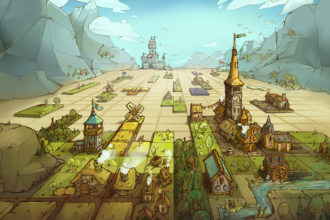
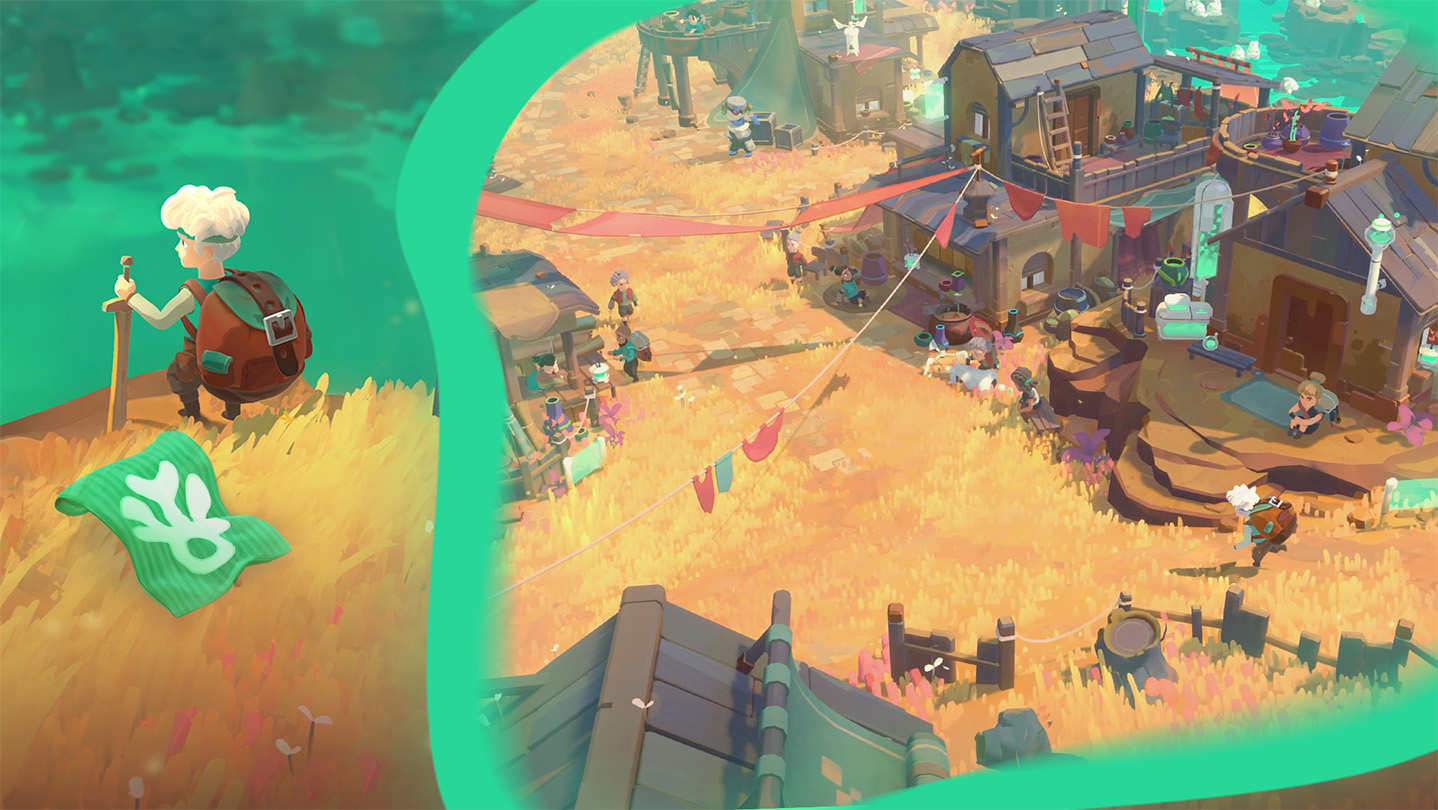
Visually, Moonlighter 2 continues to build its own identity while expanding the world established by the original.
The graphics support both sides of the experience. The dungeons need to feel adventurous and dangerous, while the shop and town provide a contrasting space where players can focus on management and progression.
That visual contrast helps reinforce the game’s central structure.
You’re constantly moving between two very different activities, and the presentation helps make those transitions feel natural.
Quality-of-Life Improvements
One of the benefits of a sequel is that developers have the opportunity to look at what worked in the original and identify where the experience could be smoother.
Moonlighter 2 introduces quality-of-life improvements alongside its expanded systems, making the overall experience feel more refined.
These improvements may not be as flashy as new weapons or new dungeons, but they’re important.
When a game has this many interconnected systems, good quality-of-life design can be the difference between feeling empowered by complexity and feeling buried underneath it.
Soundtrack and Audio
The soundtrack and audio design contribute to the overall atmosphere without becoming the defining feature of the game.
The music helps differentiate the various parts of the experience and supports the contrast between dungeon exploration and the quieter shopkeeping portions.
It’s another example of the game’s supporting systems doing their job without stealing attention from the core gameplay.
Achievements and Replayability
With multiple dungeons, perks, difficulty settings, character customization, and interconnected progression systems, Moonlighter 2 has plenty of reasons to keep playing.
Achievements add another layer for completion-focused players, while the variety of builds and strategies can encourage experimentation.
The game’s replayability isn’t simply about starting the same run over and over.
It’s about discovering how all of the systems interact and finding new ways to approach them.
That’s a much stronger foundation for long-term engagement.
What Works
- The gameplay loop is addictive: Dungeon crawling and shopkeeping feed directly into one another.
- Systems work together: Combat, resources, shop management, upgrades, and progression feel interconnected.
- More depth than the original: The sequel significantly expands the number of systems and choices.
- Strong customization: Weapons, perks, abilities, and loadouts give players plenty of room to experiment.
- Multiple difficulty settings: Normal mode is approachable while higher difficulties provide a greater challenge.
- Excellent replayability: Different dungeons, builds, perks, and system interactions encourage repeated play.
- Quality-of-life improvements: The sequel refines the experience while expanding its scope.
What Doesn’t
- The story can be confusing: Especially for players who aren’t familiar with the original.
- Narrative presentation is weak: The cutscenes don’t match the quality of the underlying gameplay systems.
- The increased complexity may not appeal to everyone: Players looking for a simpler experience could find the expanded systems intimidating.
- There is some grind: Repeated dungeon runs and progression are part of the formula, even if the interconnected systems make the process rewarding.
Final Thoughts
Moonlighter 2 is a great example of a sequel understanding what made its predecessor interesting and then asking how much further that idea can go.
The original concept was already unusual. You’re simultaneously a dungeon crawler and a shopkeeper, gathering resources in dangerous places and then turning those resources into economic progression.
The sequel takes that concept and adds considerably more depth.
More weapons.
More perks.
More progression.
More customization.
More systems.
And, perhaps most importantly, those systems actually work together.
“The systems all fit together perfectly.”
That’s the real strength of Moonlighter 2.
The story may be minimal. The cutscenes may leave something to be desired. Some players may find the added complexity or grind less appealing.
But once you get into the gameplay loop, the pieces start clicking together.
You venture into the dungeon because you need resources.
You sell those resources because you need money.
You spend that money because you need better equipment and upgrades.
Better equipment lets you go further.
Going further gives you better resources.
And suddenly you’ve been playing for several hours and wondering where the evening went.
“The gameplay loop is highly addictive.”
For fans of the original, Moonlighter 2 appears to be a substantial expansion of what already worked. For newcomers, it offers a surprisingly deep combination of dungeon crawling, RPG progression, roguelike mechanics, and shop management.
Just don’t expect the cutscenes to be the reason you stick around.