























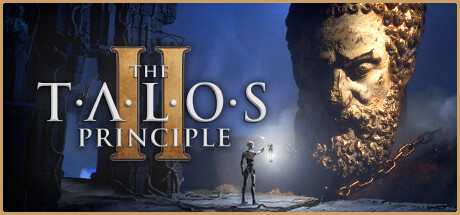
In this episode of Game Pass Grab Bag, the hosts tackle The Talos Principle 2, a philosophical puzzle game that expands boldly on the ideas introduced in its predecessor. Available on Game Pass, the sequel doubles down on existential questions, layered puzzle design, and narrative ambition.
Andrew: 95 – Game
Keith: 92 – Game
Aaron: 70 – Pass
Average: 85.7
Rather than simply offering more brain teasers, the game challenges players to wrestle with identity, belief, and purpose while navigating increasingly complex environments.
“I thought a lot.”
That reaction alone captures the heart of the experience.
Puzzle Design: Freedom Through Frustration
At its core, The Talos Principle 2 thrives on its puzzle mechanics. Unlike rigid, single-solution designs, many puzzles allow for multiple approaches, encouraging experimentation and creativity.
The satisfaction comes not just from solving a challenge, but from discovering how you solved it.
That said, difficulty varies. Some puzzles feel elegantly intuitive, while others push into brain-bending territory that can frustrate less patient players. The balance between accessibility and challenge becomes part of the conversation.
For those who enjoy critical thinking and layered problem-solving, the game delivers consistently.
Navigation & World Structure
One of the most debated elements among the hosts is navigation.
“I wish there was a map.”
“I think it needs a map.”
The semi-open hub areas and city exploration add depth to the world’s lore, but without a built-in map system, traversal can become disorienting. While some players appreciate the immersion of finding their own way, others see it as unnecessary friction.
It’s a design choice that reinforces exploration, but not always convenience.
Narrative & Philosophical Themes
Where the game truly distinguishes itself is in its narrative design.
Building on biblical allegory and philosophical discourse, The Talos Principle 2 asks players to reflect on consciousness, free will, and the nature of existence. These ideas are not background decoration — they are woven directly into gameplay and character interactions.
Dialogue sequences inject humor and personality, balancing the heavier themes with warmth and wit. The characters feel distinct, offering perspectives that both challenge and support the player’s evolving worldview.
Player choices influence the story’s direction, leading to multiple endings that reinforce the game’s central themes of consequence and belief.
Visual and Audio Presentation
Visually, the game is striking. Environments range from futuristic cityscapes to serene natural landscapes, each crafted with intentional atmosphere and scale.
Lighting, architectural design, and environmental detail enhance immersion without overwhelming the player.
The soundtrack quietly elevates emotional moments, supporting both reflective dialogue and puzzle-solving tension. Audio design remains subtle but impactful, reinforcing the contemplative tone throughout the experience.
Gameplay Experience & Accessibility
Despite its philosophical depth, The Talos Principle 2 remains accessible to new players. You do not need extensive familiarity with the first game to understand or appreciate its themes.
However, gameplay mechanics can occasionally feel cumbersome, especially during extended navigation sequences. Achievements exist but are not tailored toward completionists seeking exhaustive checklists.
The game prioritizes experience over optimization.
Final Thoughts
The Talos Principle 2 is more than a puzzle game.
It’s an intellectual exercise wrapped in interactive design.
Its strengths lie in:
• Creative, multi-solution puzzles
• Philosophical depth woven into gameplay
• Strong visual and audio presentation
• Meaningful character interactions
Its weaknesses center on:
• Occasional navigation frustration
• Uneven puzzle difficulty
• Limited guidance systems
Still, the overall consensus is clear: the game succeeds in blending thought-provoking storytelling with satisfying puzzle mechanics.
It challenges players not just to solve problems — but to question themselves.
And sometimes, that’s the most powerful mechanic of all.